

A Few Good Men
On Friendship and Taking Inventory of Your Circle

Full disclosure—I’ve had this post sitting in my drafts for months. Not because it wasn’t finished, but because I was hesitant to share it. I have a “modest” following—and I use that word loosely because, as anyone in the content creation space knows (a term I’m not particularly fond of, much like “foodie”), your audience constantly ebbs and flows.

Ironically, one of my least serious posts comparing NFL teams to foods was copied by Yahoo Sports (I see your email/location in my subs, Mr. Schwab)
For those whose income depends on creating reels, writing, vlogs, or influencing, it’s easy to get caught up in the metrics. Every post becomes something to analyze. You start second-guessing everything—was that story after two Negronis a mistake? Should I really be posting everything I ate on vacation? At a certain point, it turns into projecting your own insecurities outward.
That said, I’m trying to take a more relaxed approach to sharing my personal life online, while still expressing my thoughts and ideas more freely. There will always be eyes ready to judge, but sometimes you just have to put your words out into the ether—and let them be.

My friendships exist in silos, and that’s mostly by design.
Each one exists in its own lane. A coffee with one person here, a quick drink with someone else there, maybe a conversation that’s half catching up and half problem-solving. There’s rarely overlap between them, and I’ve never felt much motivation to merge those circles. The idea of maintaining some interconnected web of friendships—group chats buzzing constantly, inside jokes, everyone knowing everyone—feels less attainable as you get older, or it might be just Vegas.
Part of that is probably because I’ve never had much interest in putting in the energy to find the kind of male friendships that tend to form those groups. Too often, they revolve around a shared performance of identity: the same hobbies, the same jokes, the same cadence of conversation. A lot of it feels like a copy-and-paste version of each other, where everyone subtly mirrors everyone else.
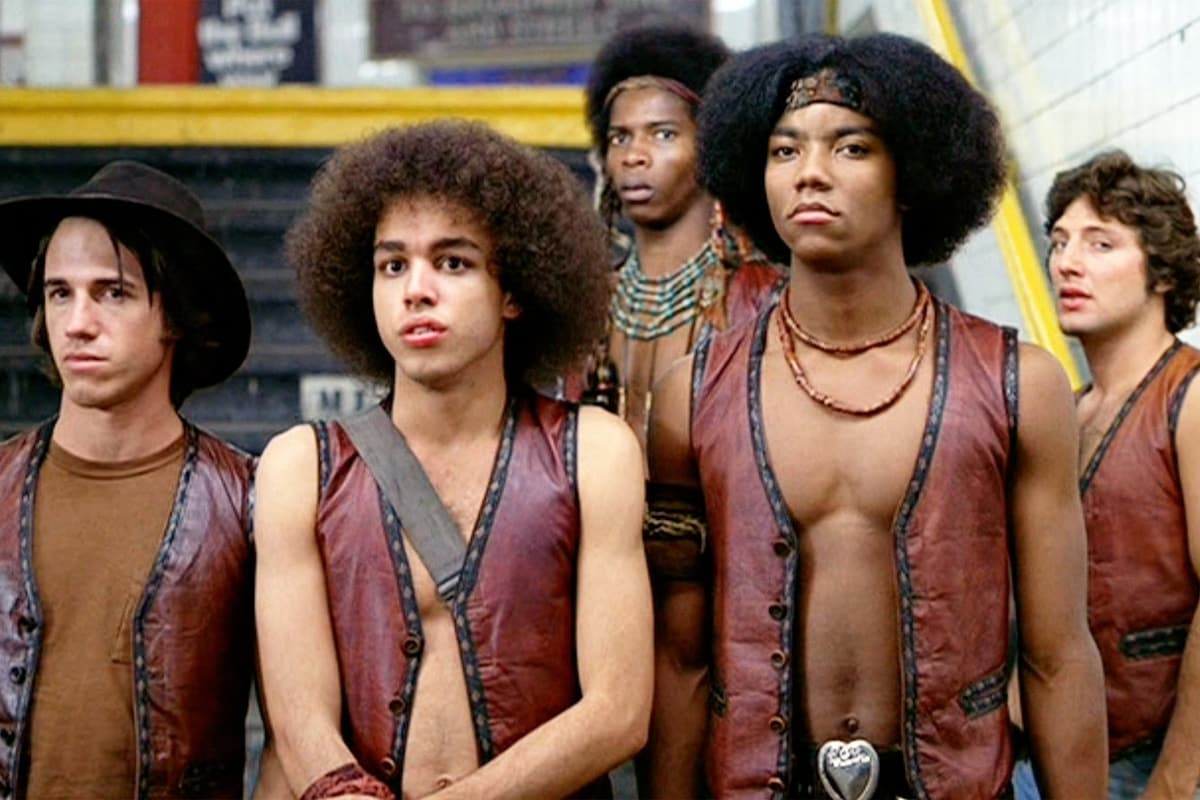
Instead, my social life is smaller and more compartmentalized. A handful of friends, most of whom I see individually, and a much stronger focus on family. I’d rather invest time in people who are genuinely important to me than spend energy maintaining a broad social network. Independence has always come naturally to me, and the idea of needing a group for emotional reinforcement feels unnecessary.
Still, the cultural messaging around friendship makes you question this sometimes. Groups of friends appear everywhere—on social media, in sitcoms, in the background of restaurants and bars. The archetype is familiar: six or seven people constantly orbiting each other’s lives, sharing dinners, vacations, group texts. It’s presented as the default structure of adulthood.

I miss late 90’s/early Aughts network sitcoms
You see it and wonder whether that’s what you’re supposed to want.
But the more I’ve thought about it, the more I’ve realized that the desire for a “friend group” is often less about genuine need and more about social optics. People like the idea of belonging to a visible collective. It signals that you’re socially successful, that you have a network, that you’re part of something. Social proof is still a key driver in dating I feel, but a pack mindset that was common in grade school is less necessary as you age.
In reality, adult friendships rarely function that way.
Research on friendship patterns suggests that most adults maintain a small number of close relationships—often around five—and that these relationships don’t necessarily exist within a single cohesive group. Anthropologists who have studied social networks extensively argue that humans simply don’t have the cognitive bandwidth to maintain a large number of meaningful relationships simultaneously.
What often looks like a friend group from the outside is actually a loose association of people who share an activity or environment: coworkers, teammates, cohorts at the gym, classmates, neighbors. Remove that context and the group tends to dissolve.
That makes sense to me.
Most of the friendships I see among guys in my demo or older are built around shared “clubs”—sports, work, hobbies, drinking, and gyms. The connection is less about who someone is as a person and more about what they participate in. I see this at work constantly, where I stick out like a sore thumb because I don’t relate to the cultural north star of Star Wars or Pokémon. Evolutionary psychologists have pointed out that male friendships historically developed around collective activity rather than individual emotional exchange.
Which explains why so many male (and female?) friend groups feel interchangeable.
Swap out one person, and the dynamic doesn’t change much.
That’s not something I’ve ever found particularly meaningful. I’d rather have a small number of relationships where the connection is specific and intentional, even if those relationships exist separately from one another.
Another reason I’ve never chased friend groups in my 30’s is that friendships, at least in adulthood, inevitably contain a transactional element. People provide value to each other—conversation, advice, professional connections, shared experiences. There’s nothing inherently wrong with that. It’s simply how adult relationships operate once the randomness of childhood proximity disappears.
Acknowledging that reality makes friendships easier to understand. They serve a role in your life, just like you serve a role in theirs.
But I’ve never felt the need for those roles to overlap into some kind of social ecosystem.
Family and some romantic relationships fill most of the space that a large friend group might otherwise occupy. These relationships tend to have a depth and permanence that friendships often lack, and they don’t require constant maintenance in the same way. When you grow up close to your family, the urge to construct a surrogate “community” through friends becomes much weaker.
The modern conversation around loneliness often assumes that people without large social networks must be missing something fundamental. Surveys about loneliness frequently include questions about whether someone “feels part of a group of friends,” as if that structure is the baseline for social belonging.
But loneliness and social structure are not the same thing.
You can be surrounded by people and still feel disconnected. You can also live a fairly independent life with a small number of relationships and feel perfectly content.
The loneliness people experience often comes less from the absence of relationships and more from the belief that their lives are supposed to look like someone else’s.
Social media amplifies this effect. Friend groups appear constantly—birthday dinners, vacations, weddings, group selfies. It creates the impression that everyone else is operating inside these tight-knit circles of connection.
In reality, many of those groups are situational or temporary.
People move cities. Jobs change. Relationships shift. The group slowly fragments.
Independence has always felt more stable than social architecture. A few close relationships, strong family ties, and the ability to move through life without relying on a collective identity—that structure works well for me.
Friend groups might offer certain benefits: built-in social plans, shared experiences, a sense of community. But they also come with obligations, expectations, and a certain level of conformity.
And for some people, those trade-offs simply aren’t worth it.
I don’t feel like I’m missing out on anything essential. I’ve never needed a crew, a pod, or a group chat to feel grounded.
A handful of meaningful relationships—and the freedom to live independently—has always been enough.
I’ll post this maybe once on socials, and if the numbers suck I could care less. It was either this or ‘tHe teN diShes yoU havE to TrY thiS spRing” for this week’s post. I’ll leave with this little quote:
People have strong opinions and weak bodies.
They have plenty of dogmas but lack perspective.
They want to get respect but refuse to give grace.
They love to criticize the shoes you walk in but lack the ability to walk in other people’s shoes.
They want to be heard but have nothing to say that’s worth the noise they are making.
You do you.
Let others do them.
And don’t bitch so much.
What I’ve Been Digging Lately:
Why am I just now listening to this crazy-slept on shoegaze band from the 90’s?
You can take the boy out of Texas, but you can’t take Texas out of the boy.
I don’t know what to call this genre of music—abrasive-post-punk-core? Model/Actriz, Ditz, and Lip Critic’s sound is equivalent to having a nervous breakdown. No other bands executing this level of creativity right now.
People have strong opinions and weak bodies. 👍
One of your best articles.I feel very connected.👍